
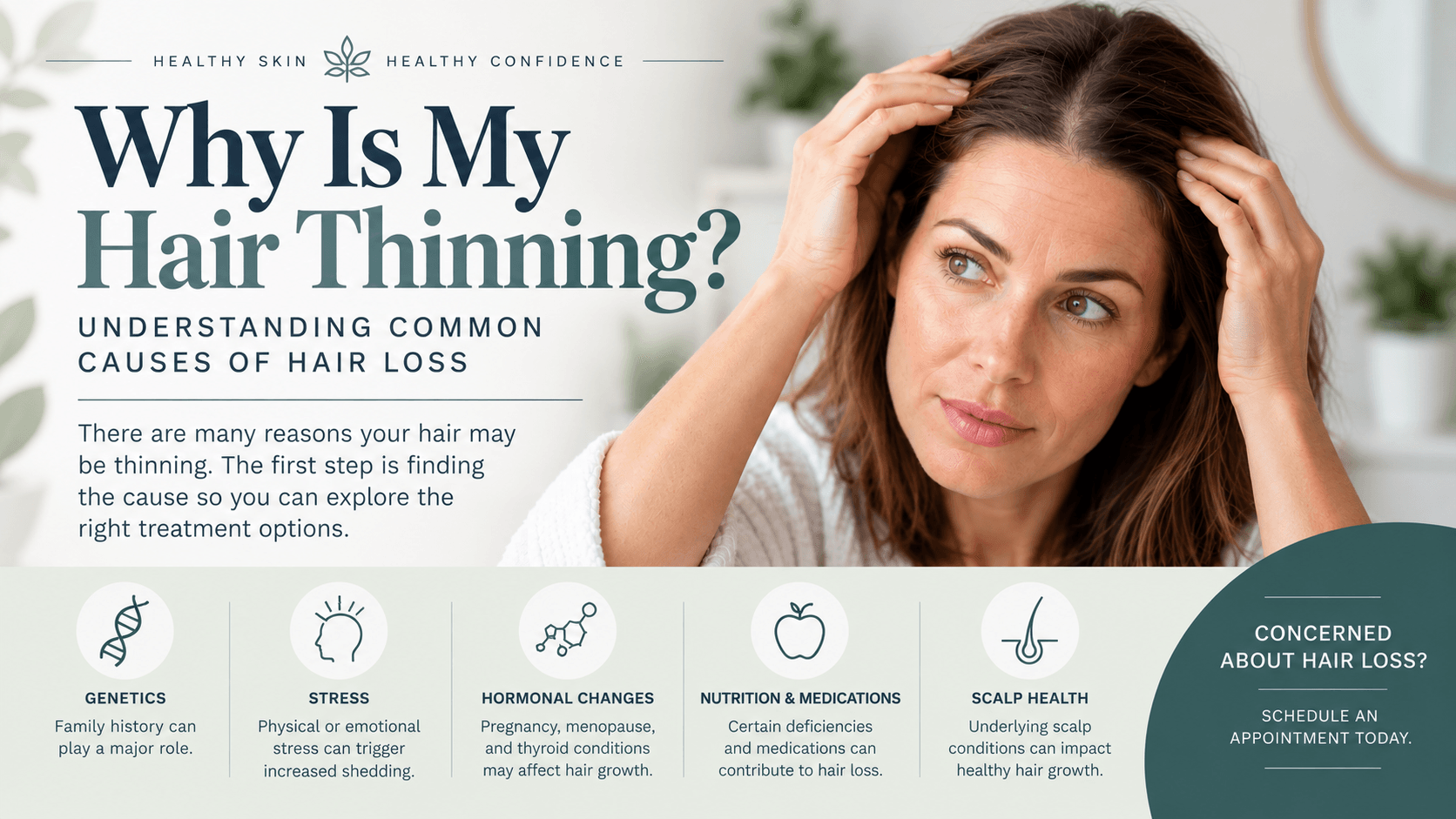
Why Is My Hair Thinning? Understanding Common Causes of Hair Loss
Finding more hair than usual in your brush or shower drain can be concerning. Hair naturally goes through cycles of growth and shedding, but noticeable thinning, excessive shedding, or bald patches may indicate something more is happening.
There are many possible causes of hair thinning, and identifying the underlying reason is an important first step toward determining whether treatment may help.
Dermgroup physicians evaluate hair and scalp concerns for patients throughout Lake Norman, Concord, Salisbury, and Harrisburg. Here are some of the most common reasons your hair may begin to thin.
Genetics Can Play a Major Role
One of the most common causes of gradual hair thinning is androgenetic alopecia, often called male or female pattern hair loss.
Genetics and hormones contribute to this condition, but it can look different from person to person. Men may notice a receding hairline or thinning around the crown, while women commonly experience gradual thinning or widening of the part.
Because this type of hair loss tends to progress over time, earlier evaluation can be helpful when considering treatment options.
Stress Can Trigger Excessive Shedding
Have you experienced increased shedding several months after an illness, surgery, major life event, significant weight loss, or period of intense stress?
This type of hair loss may be telogen effluvium. It occurs when more hairs than usual enter the resting and shedding phases of the hair growth cycle.
The triggering event and the noticeable shedding may be separated by weeks or months, which can make the connection difficult to recognize.
Stress can affect more than your hair. Learn more in our article How Stress Affects Your Skin and What You Can Do About It.
Hormonal Changes May Affect Hair Growth
Hormonal changes can have a significant impact on the hair growth cycle.
Hair thinning may occur in connection with:
- Pregnancy and the postpartum period
- Menopause
- Thyroid conditions
- Other hormonal changes or imbalances
Determining whether hormones are contributing to hair loss may require a review of your symptoms, medical history, medications, and other factors.
Nutrition and Medications Can Be Factors
Healthy hair growth depends on adequate nutrition. Certain nutritional deficiencies may contribute to shedding or thinning in some patients.
Hair loss can also occur as a side effect of certain medications or medical treatments.
This is one reason it is important not to rely on supplements or products marketed for hair growth without first understanding what is causing the problem. A treatment that makes sense for one type of hair loss may not be appropriate for another.
Your Scalp Health Matters Too
Sometimes the problem begins with the scalp itself.
Inflammation, scaling, itching, infection, or certain dermatologic conditions can interfere with healthy hair growth. Some types of hair loss can also cause permanent damage to hair follicles if they are not identified and treated appropriately.
Contact a dermatology physician if you notice symptoms such as:
- Bald or thinning patches that appear suddenly
- Scalp redness, pain, itching, or significant scaling
- Broken hairs
- Scarring or changes in the appearance of the scalp
- Rapid or unexplained hair loss
Learn more about the medical skin and scalp conditions treated through our General Dermatology services.
Why an Accurate Diagnosis Matters
Hair loss describes a symptom, not a single condition. Treatment depends heavily on why the hair is thinning.
A dermatology evaluation may include examination of the hair and scalp, discussion of your medical and family history, review of medications, and additional testing when appropriate.
Once the cause is better understood, your physician can discuss treatment options that may be appropriate for your specific condition.
What Hair Restoration Options Are Available?
Depending on the diagnosis, treatment may include prescription medications, topical therapies, changes to an existing treatment plan, or other approaches designed to support hair growth and scalp health.
Dermgroup also offers hair restoration services for appropriate patients. Your physician can help determine whether these options make sense based on the type and extent of your hair loss.
When Should You See a Dermatology Physician About Hair Loss?
Gradual changes can be easy to dismiss, but you do not need to wait until hair loss becomes severe before asking about it.
Consider scheduling an evaluation if you notice persistent shedding, a widening part, a receding hairline, bald patches, significant changes to your scalp, or hair loss that concerns you.
Dermgroup provides dermatology care for patients throughout Lake Norman, Concord, Salisbury, and Harrisburg. If you are concerned about hair thinning or hair loss, schedule an appointment at your preferred Dermgroup location to have your hair and scalp evaluated.