
Understanding Your Skin Barrier and How to Protect It
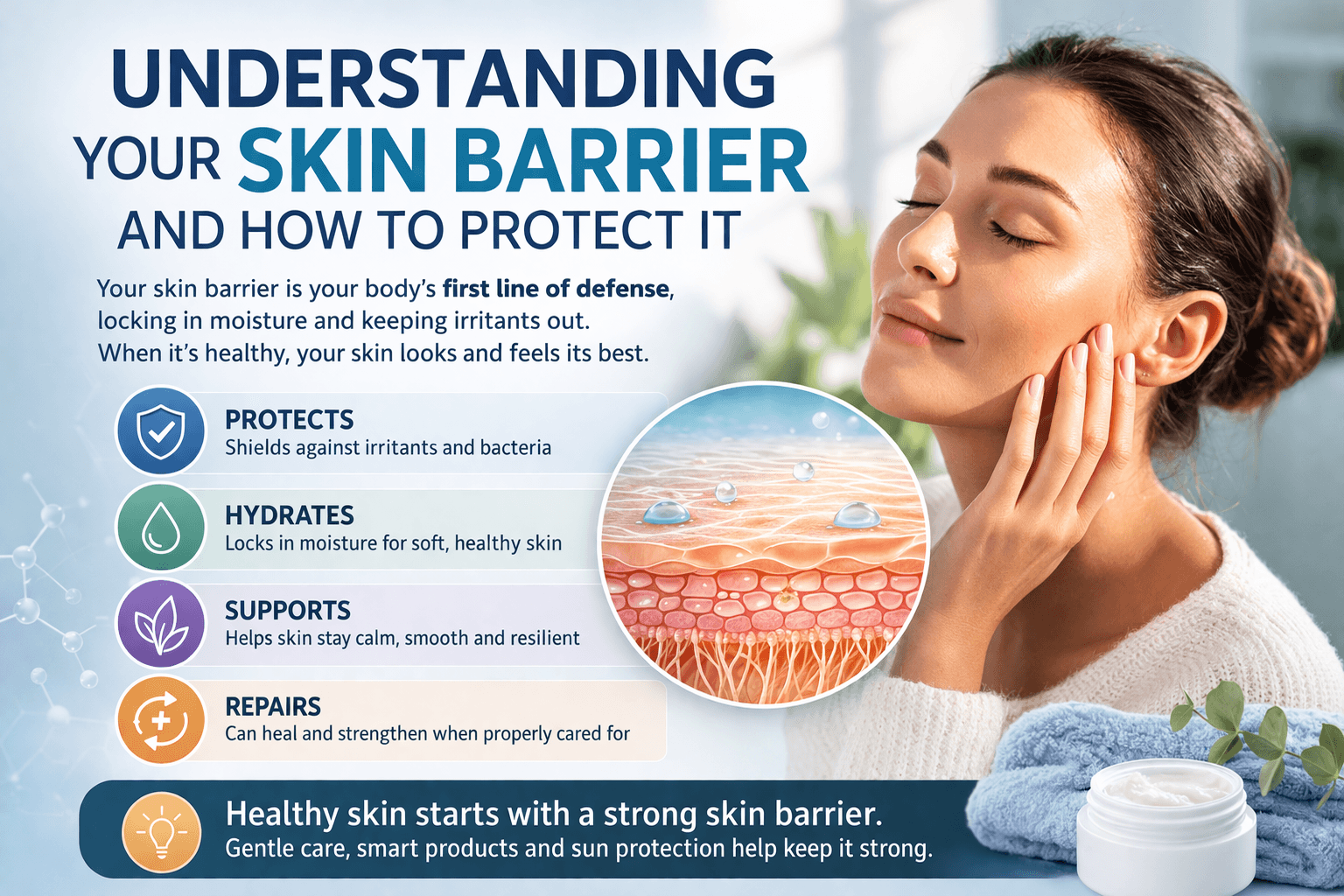
Your skin does more than just cover your body. It serves as a protective shield against environmental stressors, bacteria, and moisture loss. This outermost layer, known as the skin barrier, plays a critical role in maintaining healthy, balanced skin.
When the skin barrier is functioning properly, your skin feels smooth, hydrated, and resilient. When it becomes damaged, it can lead to irritation, dryness, breakouts, and increased sensitivity.
What Is the Skin Barrier?
The skin barrier is the outer layer of your skin, often referred to as the stratum corneum. It is made up of skin cells and lipids that work together to lock in moisture while keeping harmful irritants out.
You can think of it as a brick-and-mortar structure:
- Skin cells are the “bricks”
- Natural oils and lipids act as the “mortar”
When this structure is intact, your skin retains hydration and defends against external damage effectively.
Signs of a Damaged Skin Barrier
When the skin barrier becomes compromised, your skin may start to show noticeable symptoms. These can include:
- Dryness or flaking
- Redness or irritation
- Increased sensitivity to products
- Breakouts or inflammation
- A tight or uncomfortable feeling after cleansing
Many patients assume these are isolated skin issues, but they are often connected to a weakened skin barrier.
What Causes Skin Barrier Damage?
There are several common factors that can disrupt the skin barrier:
- Overuse of harsh skincare products
- Excessive exfoliation
- Cold or dry weather conditions
- Sun exposure without proper protection
- Underlying skin conditions such as eczema or rosacea
Environmental stressors combined with improper skincare routines are among the most frequent causes.
For more information on related concerns, visit our Conditions Treated page and read Dry Skin vs. Eczema: When Is It Time to See a Dermatologist?.
How to Restore and Protect Your Skin Barrier
Repairing your skin barrier takes a consistent and thoughtful approach. Dermatology-guided care helps ensure that you are improving your skin without unintentionally making the problem worse.
Key strategies include:
-
- Using gentle, non-irritating cleansers
- Limiting exfoliation and active ingredients
- Applying moisturizers designed to support barrier repair
- Using sunscreen daily to prevent further damage
If symptoms persist, professional evaluation can help determine whether an underlying condition is contributing to the issue.
When to See a Dermatology Physician
If your skin remains irritated despite adjusting your routine, or if symptoms worsen over time, it may be time to seek professional care.
A Dermgroup physician can:
- Evaluate your skin condition accurately
- Identify underlying causes
- Recommend appropriate treatment options
Early evaluation can help prevent long-term irritation and improve overall skin health.
Protect Your Skin for Long-Term Health
Your skin barrier is essential to maintaining healthy skin. Taking steps to protect and restore it can improve both the appearance and function of your skin over time.
If you are experiencing ongoing dryness, irritation, or sensitivity, schedule an appointment at your preferred Dermgroup location for personalized care and long-term skin health.