
Understanding Dark Spots, Sun Spots, and Melasma
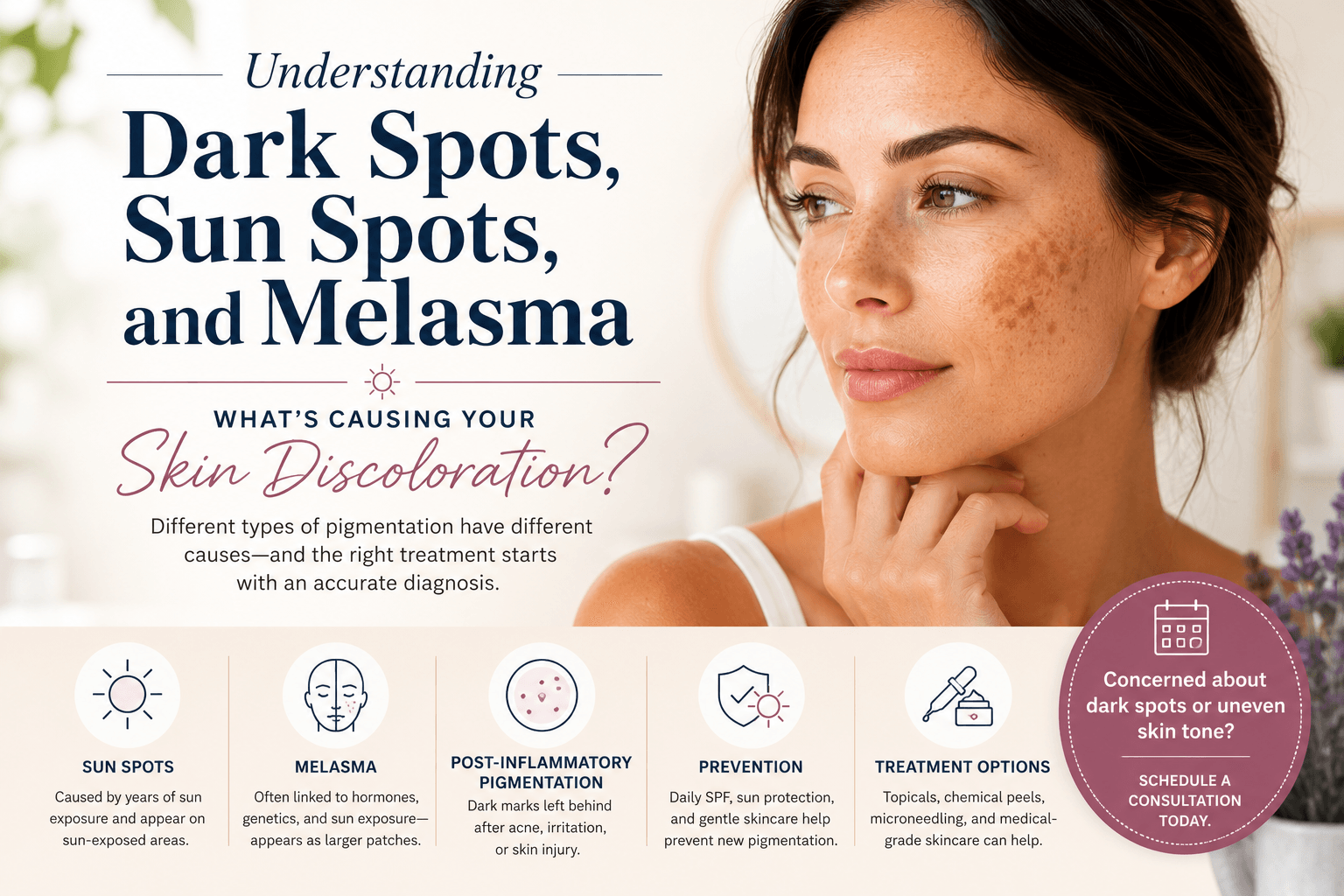
Many people notice changes in their skin tone during the summer months. Whether it is a new dark spot after time outdoors or patches of discoloration that seem to become more noticeable in the sun, pigmentation changes are one of the most common reasons patients seek dermatology care.
Patients throughout Lake Norman, Concord, Salisbury, and Harrisburg frequently ask why these spots develop and whether they can be treated. The answer depends on the underlying cause.
Understanding the difference between sun spots, melasma, and other forms of pigmentation is the first step toward choosing the right treatment.
Sun Spots
Sun spots, also called age spots or solar lentigines, develop after years of cumulative ultraviolet exposure.
They commonly appear on areas that receive the most sunlight, including:
- Face
- Hands
- Chest
- Shoulders
- Forearms
While sun spots are generally harmless, any new or changing pigmented lesion should be evaluated by a dermatology physician to rule out skin cancer.
What Is Melasma?
Melasma appears as larger patches of brown or gray discoloration, most commonly on the:
- Forehead
- Cheeks
- Nose
- Upper lip
Melasma is often influenced by hormones, genetics, and sun exposure. Pregnancy, birth control medications, and hormonal changes frequently contribute to its development.
Unlike simple sun spots, melasma can be more challenging to treat and often requires a customized treatment plan.
Post-Inflammatory Hyperpigmentation
Dark marks left behind after acne, eczema, insect bites, or skin injuries are known as post-inflammatory hyperpigmentation.
Although the inflammation has resolved, excess pigment remains in the skin.
This type of discoloration often fades gradually, but physician-directed treatment may help improve the appearance more quickly.
Preventing New Pigmentation
The most effective treatment is preventing additional discoloration from developing.
Important preventive measures include:
- Wearing broad-spectrum sunscreen every day
- Wearing wide-brim hats outdoors
- Seeking shade whenever possible
- Reapplying sunscreen every two hours
- Avoiding picking at acne or skin lesions
Consistent sun protection helps prevent existing pigmentation from becoming darker.
For additional guidance, read our article on Choosing the Right Sunscreen for Your Skin Type.
Treatment Options
Treatment depends on the type and cause of pigmentation.
Your dermatology physician may recommend:
- Prescription topical medications
- Chemical peels
- Microneedling
- Medical-grade skincare
- A customized treatment plan
Because every patient’s skin is different, treatment should always begin with an accurate diagnosis.
Learn more about our Chemical Peels and SkinPen Microneedling services.
When to Schedule an Evaluation
Not every dark spot is simply sun damage. Any spot that changes rapidly, bleeds, develops irregular borders, or looks different from surrounding moles should be examined promptly.
Dermgroup proudly serves patients throughout Lake Norman, Concord, Salisbury, and Harrisburg. If you have concerns about skin discoloration or changing spots, schedule an appointment at your preferred Dermgroup location.